
January 7, 2026
Homeowners often wait too long to call a tree service. In Susquehanna County, heavy snow, saturated spring soils, and fast summer storms mean small problems turn into major hazards fast. This guide shows the exact point where DIY stops and professional help becomes the safer, smarter, and legally required choice.
Key Takeaways
- Identify Red Flag Thresholds: Know when size, height, or location makes DIY unsafe.
- Recognize Local Pest Emergencies: Understand when Spotted Lanternfly or EAB infestations need licensed treatment.
- Navigate Required Permits: Know when borough rules make professional service mandatory.
- Assess Structural Risk: Distinguish between cosmetic issues and structural failures that threaten your home.
- Understand the Professional Difference: Why insurance and certification matter when 2,000 lbs of wood is hanging over your roof.
The 3-Point “Call a Pro” Checklist
Before you pull out a ladder, ask yourself these three questions. If the answer to any of them is “Yes,” it is time to call a professional.
- Is the work off the ground? If you cannot reach the limb from the ground with a pole pruner, the risk of injury increases exponentially.
- Is the tree near a target? If the tree falls, will it hit a house, car, power line, or fence? Professionals have the rigging gear to lower wood safely; gravity is not a reliable method.
- Is the equipment heavy? Chainsaws are dangerous tools. If you are not trained in their use, especially on a ladder or while climbing, the risk is not worth the savings.
Immediate Safety Hazards: Call Right Away
These conditions constitute an emergency or urgent situation. Do not wait for “seasonal maintenance.” Tree work remains one of the highest-risk trades nationwide according to industry safety reports. Do not take unnecessary chances.
1. Storm Damage & “Widow Makers”
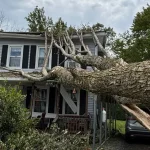
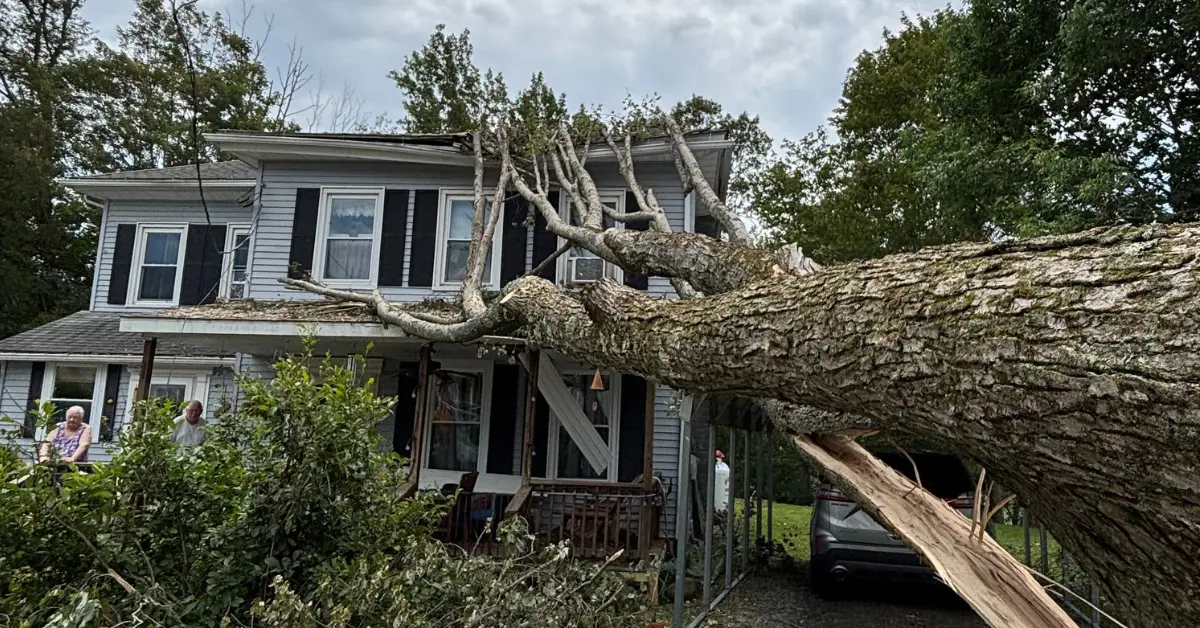
Susquehanna County storms often leave broken branches hanging loosely in the canopy. These are known as “widow makers” because they can fall silently and fatally days after the storm.
- When to Call: If you see any detached or broken branches hanging in the tree larger than 2 inches in diameter.
2. Sudden Leaning
Trees naturally grow toward sunlight, but a tree that has suddenly changed its angle (often after a rainstorm or heavy wind) is failing at the roots. This is especially common during the spring thaw when our clay soils are fully saturated and lose their grip.
- When to Call: If you notice fresh soil heaving (cracks in the dirt) on the side opposite the lean, or if the lean has visibly increased overnight. This is an active failure.
3. Utility Line Conflicts
Trees growing into power lines are a fire hazard and a shock risk.
- When to Call: NEVER attempt to trim near power lines yourself. If a branch is touching or within 10 feet of a high-voltage line, call a professional who is certified for line-clearance or contact your utility provider immediately.
Health Diagnosis: When DIY Treatments Fail
Some problems are too complex for guessing. Susquehanna County faces specific biological threats that require licensed application of treatments.
Insect Infestations requiring Systemic Treatment
- Spotted Lanternfly: While you can scrape egg masses yourself, a heavy infestation high in the canopy of a Maple or Walnut requires professional systemic injection or spraying to control the population effectively.
- Emerald Ash Borer (EAB): If you have an Ash tree you want to save, over-the-counter spikes are often insufficient. Professionals use arterial injections (like Emamectin Benzoate) that are restricted-use pesticides. Call immediately if you see canopy thinning or woodpecker activity on an Ash.
Fungal Infections & Rot
- Mushrooms on the Trunk: If you see “conks” or mushrooms growing directly on the bark or at the root flare, the tree is rotting from the inside out.
- When to Call: As soon as you see fungal fruiting bodies. A professional must use a resistance drill or sonic tomography to determine if the tree is hollow and liable to collapse.
Legal & Regulatory Triggers
In many parts of our county, you are legally obligated to hire a professional or obtain a permit for certain work.
Borough Shade Tree Commissions
If you live in a borough like Montrose, Susquehanna Depot, or Forest City, trees in the “right-of-way” (usually the strip of grass between the sidewalk and curb) are protected.
- When to Call: Before you touch a street tree. A professional can help you navigate the permit process with the local Shade Tree Commission to avoid fines.
PA One Call (811)
Stump grinding involves digging.
- When to Call: If you need a stump removed. A professional service will handle the PA One Call notification (811) to ensure no gas or electric lines are severed during the grinding process.
DIY vs. Professional: The Risk Assessment
| Scenario | DIY (Homeowner) | Professional (Top Notch Tree Care) |
| Pruning a small apple tree (feet on the ground) | Safe. Good weekend project with hand shears. | Available, but often DIY-friendly. |
| Branch 20 feet up over the driveway | Dangerous. High fall and drop risk. | Recommended. Bucket truck or rigging for controlled lowering. |
| Tree leaning toward neighbor’s house | High Liability. You are liable for damage. | Essential. General Liability insurance protects you. |
| Ash tree with 50% dead canopy | Extreme Danger. Wood is brittle and snaps unexpectedly. | Essential. Specialized rigging safely dismantles without climbing unsafe wood. |
Cost Factors: Why Estimates Vary
When you call a professional, several factors determine the price. Understanding these helps you know what to expect.
- Hazard Level: A dead, rotting tree is more dangerous (and expensive) to remove than a living one because climbers cannot trust the wood. Calling sooner saves money.
- Targets: A tree in an open field is cheaper to remove than one hovering over a slate roof or pool.
- Equipment Access: If we can get a bucket truck to the tree, it is more efficient. If we have to climb and carry wood out by hand from a steep backyard, labor costs rise.
Frequently Asked Questions
Should I call a tree service for a leaning tree?
If the tree has been leaning for years and looks healthy, it may be stable. However, if the lean is new, or if you see soil heaving (cracks in the ground) on the opposite side, call immediately. This indicates root failure, particularly common in our rocky, saturated soils.
When is a tree considered dangerous?
A tree is dangerous when it has a significant structural defect (like rot, a crack, or dead wood) and a target it could hit (like a house or walkway). A professional risk assessment determines if the defect is severe enough to require removal.
Can I remove a tree myself in Pennsylvania?
Legally, you can remove trees on your own private property in rural areas (outside of boroughs with specific ordinances). However, if the tree is near power lines, property boundaries, or large enough to cause damage, doing it yourself exposes you to immense physical risk and financial liability.
Will homeowner’s insurance cover tree removal?
Typically, insurance only covers removal if the tree has fallen on a covered structure (like your house or garage). They generally do not cover the preventative removal of dead or leaning trees. However, we can provide a risk assessment report to help you document the condition for your insurer.
What if my neighbor’s tree looks dangerous?
You cannot legally cut down a neighbor’s tree, but you can hire a professional to trim branches that hang over your property line (as long as it doesn’t harm the tree’s health). If the tree is dead and threatens your home, sending a certified arborist’s report to the neighbor via certified mail can sometimes establish liability if they fail to act.
How quickly can you respond to an emergency?
We prioritize storm damage and active hazards. If a tree has fallen on a structure or is blocking a driveway, call us immediately. We offer expedited emergency service to stabilize the situation and prevent further damage.
Final Thoughts: The Rule of Doubt
The golden rule of tree care is simple: If you have to ask, “Is this safe?”, it probably isn’t.
Tree work is inherently dangerous. Professionals mitigate this risk with training, helmets, ropes, and insurance. If you are looking at a tree problem in Susquehanna County and feeling unsure, that is your signal.
Contact Top Notch Tree Care for a clear, risk-based assessment of your tree problem. You will know if the issue is safe to monitor, treat, or remove before it becomes a liability.